


Health is one of the best examples of how European cooperation can deliver clear benefits for citizens across the EU. Among the most pressing health challenges shared by all Member States, despite regional differences, is cardiovascular health. That is why the European Commission is preparing a dedicated Cardiovascular Health Action Plan, inspired by the success of the EU Beating Cancer Plan adopted in 2021.
Where are we on a Cardiovascular Health Action Plan?
The idea of an action plan to tackle cardiovascular diseases was already present in Ursula von der Leyen’s Political Guidelines, ahead of her reelection, in July 2024. The idea was reiterated in the Mission Letter she sent to the Health and Animal Welfare Commissioner Olivér Várhelyi in September 2024. On 3rd December 2024, the European Ministers of Health unanimously adopted the Council Conclusions on the Improvement of Cardiovascular Health in the EU and Olivér Várhelyi officially announced that day that the European Commission will develop a new European Cardiovascular Health Plan.
This echoes the plea of the European Alliance for Cardiovascular Health (EACH), a coalition of 17 patient organisations, industry stakeholders, research bodies, and health professional groups. EACH indeed already laid the groundwork in 2022 by publishing a proposal for a European cardiovascular health plan.
In addition to its policy work, EACH has also been active in building political support within the European Parliament. A Cardiovascular Health Plan was promised in the 2024 Manifesto of the EPP Group, the largest political group in the European Parliament. EACH launched a dedicated MEP Interest Group on Cardiovascular Health, chaired by MEP Romana Jerković. The group held its inaugural meeting on 23 April 2025 and presented a comprehensive roadmap for a European Cardiovascular Health Plan, further reinforcing the case for coordinated EU action on cardiovascular diseases.
Why actions are urgently needed – cardiovascular diseases in figures
According to the European Alliance for Cardiovascular Health, cardiovascular diseases are a group of conditions affecting the heart or blood vessels. They include heart attacks and strokes, as well as arrhythmias and congenital heart disease. The Alliance stresses that cardiovascular diseases are closely interlinked with other chronic diseases such as diabetes or kidney disease, but also vascular dementia which is often caused by heart disease and stroke.
Cardiovascular diseases are the leading cause of death in the EU, followed by cancer and respiratory diseases. They account for one third of all deaths across Europe and affect an estimated 62 million people. The economic burden is equally staggering, with annual costs reaching €282 billion. Alarmingly, cardiovascular diseases are also responsible for 20% of all premature death (occurring before the age of 65) in the EU.
The most common cardiovascular diseases include ischaemic heart disease (heart attacks) and cerebrovascular diseases (strokes). Heart attacks are by far the deadliest cardiovascular disease. Heart attacks, which as its name suggests affect the heart, happen when blood flow to the heart muscle is blocked, usually by a clot in the arteries that supply the heart. Strokes affect the brain. They happen when blood flow to the brain is interrupted, either by a clot or a burst blood vessel.
The European Society of Cardiology’s EU27 Cardiovascular Realities 2025 report revealed significant gender and geographical inequalities regarding cardiovascular diseases in the EU. Western and southern Member States, including countries like France, Spain, and the Netherlands, report the lowest age-standardised cardiovascular diseases mortality rates, below 250 deaths per 100,000 people. In contrast, the Baltics, Central and Eastern European countries, such as Bulgaria, Romania, and Hungary, exhibit much higher rates, exceeding 600 deaths per 100,000 people. This east-west gradient mirrors the persistent health inequalities within the EU and underscores the need for targeted action in Eastern Member States.
Despite the common perception that heart disease primarily affects men, the report highlights a critical and often overlooked reality: more women than men die from cardiovascular diseases. Cardiovascular diseases represent 37% of deaths for women compared to 31% for men.
What can the EU do to prevent cardiovascular diseases?
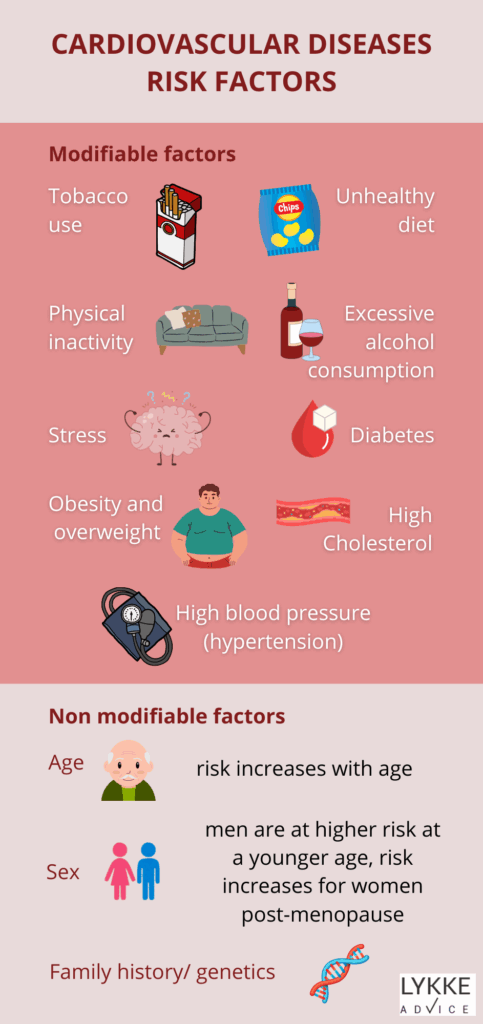
Prevention of cardiovascular diseases implies modifying risk factors such as smoking, diet, physical inactivity, etc. EU policies can have a real impact by supporting education campaigns, pushing for healthier food environments, and restricting tobacco and alcohol marketing. The Tobacco Products Directive, the Tobacco Advertising Directive, and the Tobacco Taxation Directive were supposed to be revised in 2022 but were put on hold. A move that is strongly criticized by health NGOs. The idea of mandatory front-of-pack nutrition labelling, like Nutri-Score which can help people make informed choices, was on the agenda but shelved by the Commission due to high division between Member States on the matter.
The EU4Health programme is supporting Member States financially to promote healthy lifestyles and tackling non communicable diseases risk factors with a total budget of 20.5 million euros in 2024.
One of the most renown example cardiovascular diseases prevention is the North Karelia Project in Finland, a long-term campaign to reduce smoking, high blood pressure, and saturated fat intake. The North Karelia Project was started in 1972 as a response to the high cardiovascular mortality among men in North Karelia, Finland’s easternmost province. The project used community-based interventions, partnered with the food industry to develop low-salt products, and promoted health through schools and media campaigns. These efforts led to remarkable public health outcomes, including a 82% reduction in cardiovascular disease mortality for working age men between 1972 and 2012, along with significant drops in cholesterol levels and smoking rates.
How can EU policies foster early detection and screening of cardiovascular diseases?
Early detection is a crucial issue for cardiovascular diseases. Many people live undiagnosed with hypertension or atrial fibrillation. The Healthier together – EU non-communicable diseases initiative encourages Member States to explore screening for cardiovascular risk including hypertension, cholesterol, and diabetes. It will do so by developing guidelines for population and/or opportunistic screening, joint definition of ethical guidance, minimum standards, and training of healthcare professionals.
Through the Joint Action on Cardiovascular Diseases and Diabetes (JACARDI), launched in 2023 with a 53 million Euros grant from the EU4Health Programme, the European Commission is supporting the exchange of best practices and testing innovative screening models across the EU with 18 pilots project for screening high-risk populations.
One of these best practices is the Prevention Consultation Cardiometabolic Risk (PC CMR) programme in the Netherlands. This programme integrated cardiovascular disease risk screening in primary care which enables early detection. Sixteen general practices throughout the Netherlands were recruited to implement the PC CMR programme during 6 months between 2009 and 2010. In eight practices eligible patients aged between 45 and 70 years old were actively invited by a personal letter and in eight other practices eligible patients were informed about the PC CMR only by posters and leaflets in the practice. Participating patients completed an online risk estimation as a first step. As a second step, patients estimated as having a high risk according to the online risk estimation were advised to visit their general practice to complete the risk profile with blood pressure measurements and blood tests for cholesterol and glucose and to receive recommendations. It resulted in 33% of invited participants completing the assessment, with 22% receiving new diagnoses.
What can the EU do to improve treatments and care of cardiovascular diseases?
While prevention and early detection are likely to be the focus of the Cardiovascular Health Plan, actions on treatment, notably equitable access to treatment are needed. EU policies can help by supporting clinical guideline harmonisation, cross-border care, and digital health tools for better treatment adherence. Funding research on personalised cardiology and supporting the uptake of novel therapies via Health Technology Assessment can also improve outcomes. The newly adopted European Health Data Space (EHDS), will improve research for treatments by improving data availability for clinicians and researchers, making treatments more precise and coordinated across borders.
Under its Horizon 2020 and Horizon Europe programmes the EU is funding many projects on cardiovascular diseases treatments in areas as wide as gene therapies for heart failure (CardioReGenix), refining the use of heart defibrillator implants (PROFID) or using AI to assess patients’ response to therapy (iCARE4CVD).
A practical example of policy improving treatment and care of cardiovascular diseases is the creation of Nurse-led Heart Failure Clinics as it is the case in Sweden. Sweden established Europe’s first nurse-led heart failure clinic in Linköping in 1990 and two-thirds of Swedish hospitals now have such clinics. Nurses in these clinics typically have specialist training in heart failure management and are empowered to make protocol-led medication adjustments, provide patient education, and offer telephone counseling and follow-up after hospitalization. Nurse-led heart failure clinics have been found to significantly decrease all-cause readmission and mortality and have become a cornerstone of Sweden’s heart failure management strategy.
This article has highlighted the urgent need to address cardiovascular health at the EU-level and has outlined some concrete examples of actions already underway. With cardiovascular health now firmly on the EU policy agenda, there is a unique window of opportunity for companies, whether in treatment, medical devices, diagnostics, or digital health, to bring their expertise to contribute to the development of the Cardiovascular Health Action Plan. If your company is active in this area and would like to engage with EU policymakers, Lykke Advice is here to help. Don’t hesitate to get in touch at info@lykkeadvice.eu.
